 Skip to content

Why are state hospitals getting into debt? Let’s look at the data
Based on the analyses of the Office for Health Care Supervision (ÚDZS) and the Value for Money Unit (ÚHP), Penta presents the following key data:
State hospitals received on average 17% more for the same hospitalisation in 2024 than Penta hospitals, and up to 10% more than all private facilities combined. Despite higher financial flows, the utilisation of these resources was only at 86%, which means that nearly 55,000 patients ended up on waiting lists.
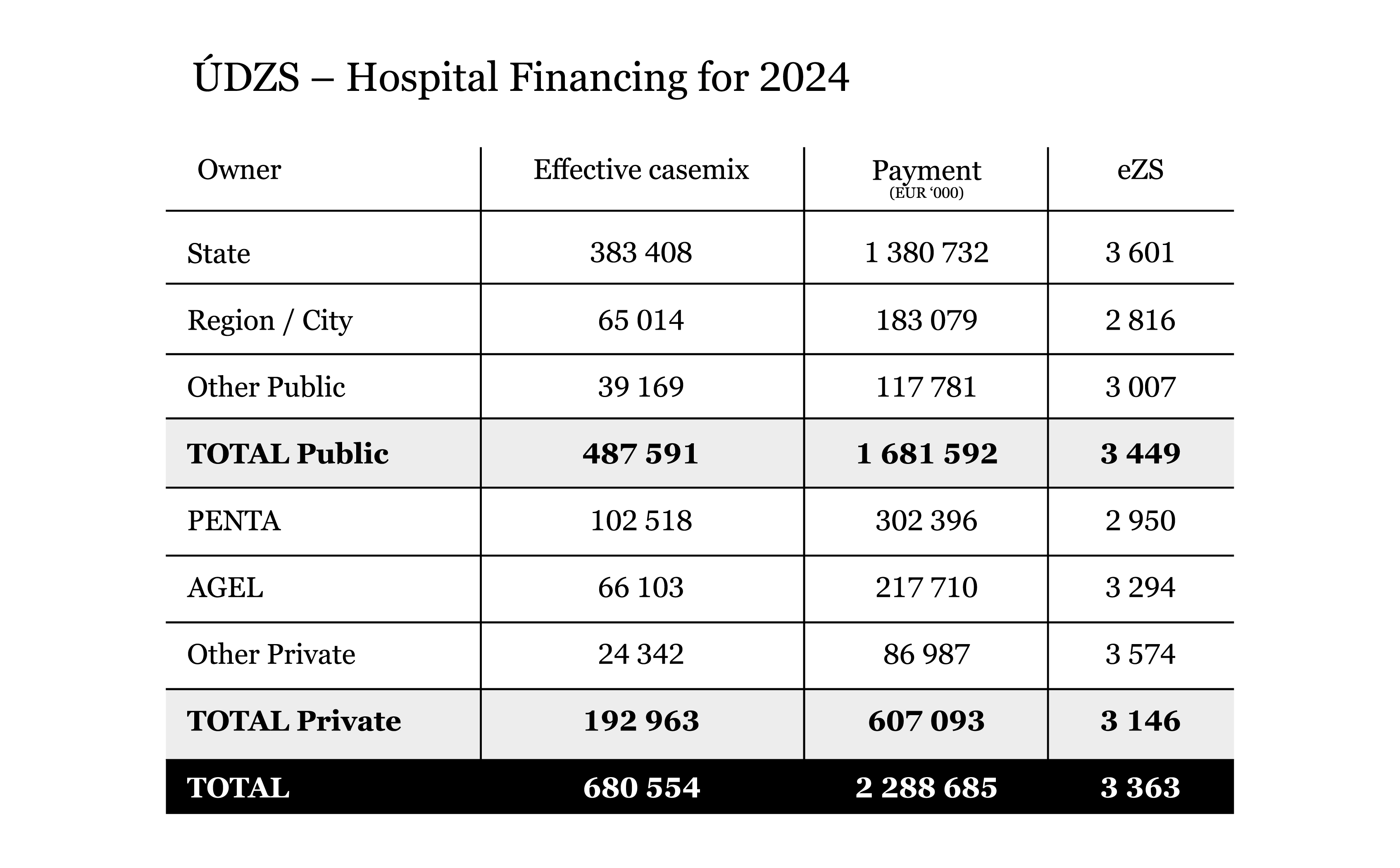
Hospitals in deficit despite strong support
State hospitals ended 2024 with an operating loss of around EUR 209 million. Even though they received debt relief amounting to EUR 93 million and operational subsidies of EUR 191 million, total extraordinary support was EUR 450 million. Penta points out that this paradox is not only due to financing; it is also primarily due to low efficiency.
Since 2020, the number of admin workers has increased by 39% and the number of doctors by 22%, but hospitalisations have decreased by 12%. If the rest of the system were inspired by the most efficient state hospitals (e.g. in Trenčín, Trnava, and Nové Zámky), up to 66,000 additional patients could be treated or EUR 233 million saved.
Since Penta primarily focuses on healthcare innovations, here is a solution it is proposing: performance-based financing. As a solution, Penta offers a transition from a flat-rate model to performance-based financing. The current share of performance-based payments is approximately 10%–15%. A gradual increase is proposed: 15% in 2025, 30% in 2026 and then 50% in 2027.
In the Czech Republic, for example, performance-based payments are already at 55%. This model aims to motivate hospitals towards more effective outcomes and fairer financing. State institutions often claim that the loss is due to the education of medical students, complex diagnoses, research and science, or availability in emergency situations. Yet Penta responds by stating that education and research are funded by grants or through other sources, not by health insurance companies. The complexity of diagnoses is taken into account in classification systems.
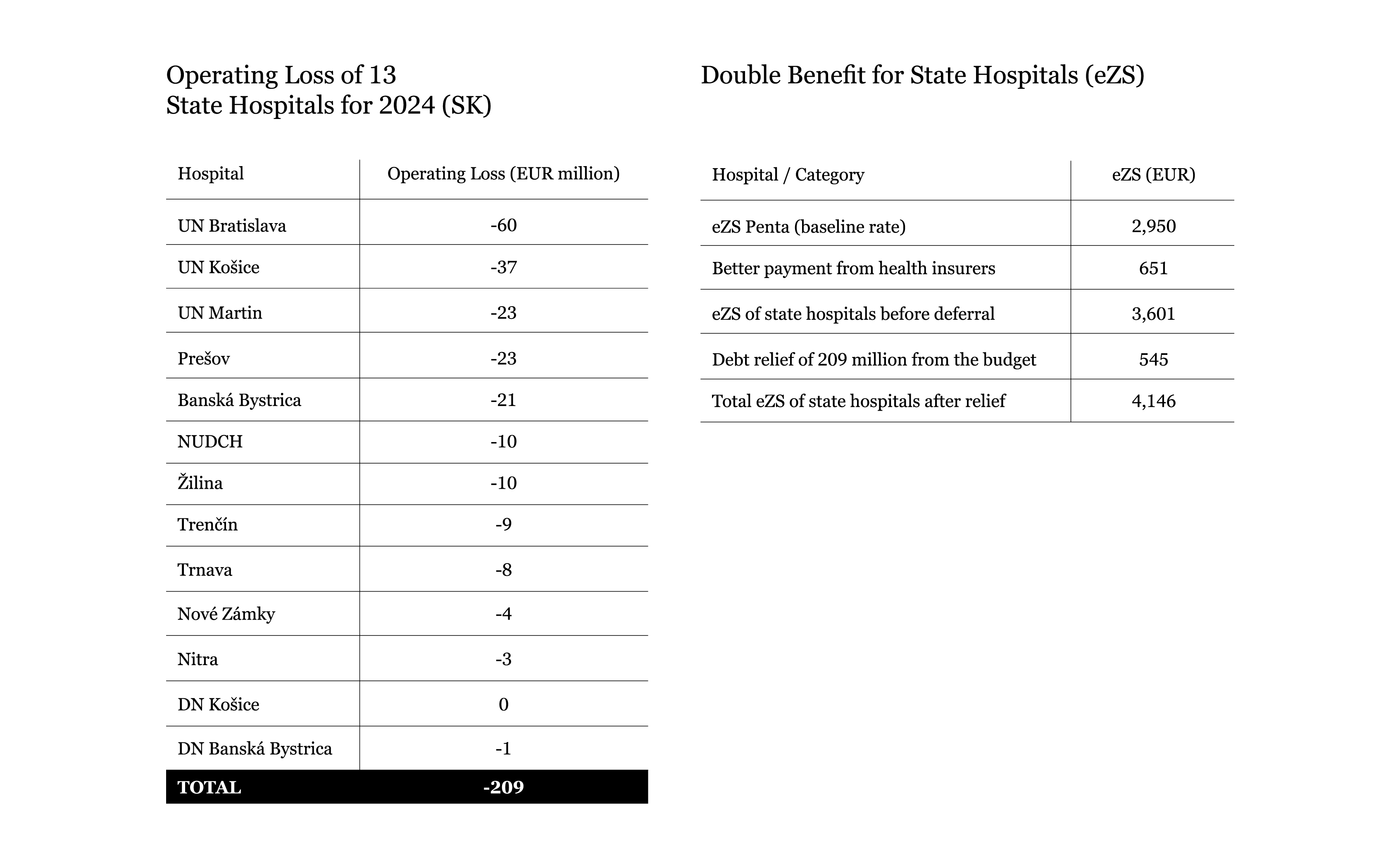
Despite the fact that state hospitals receive much more funding through allocations, subsidies, and debt relief, they remain in deficit. The main problem according to the analyses lies in low efficiency, excessive administrative costs, and insufficient motivation. Therefore, Penta proposes a system where part of the funding will depend on performance. Overall, a reform is needed that truly rewards results and addresses productivity, not just the allocation of additional resources.
Related Articles

Penta Hospitals CZ Expands Its Educational...
Penta Hospitals CZ has signed an agreement on the transfer of founding rights of the College of Nursing (Vysoká škola...read more

Penta Fund is expanding and inviting more...
The new head of Penta Fund, Tomáš Hochmeister, makes a fresh impression. He likes to smile often, and commutes by train...read more

Specialised Alzheimer Homes under the Penta...
Penta has expanded its operations in healthcare as one of the key segments. It has invested in more than 30 Alzheimer Home...read more

Penta has invested over EUR 500 million in...
Healthcare is a fundamental pillar of every society, and its quality greatly affects the lives of millions of people. We’re...read more

Penta Investments’ most successful year: EUR 621...
The year 2024 will go down in history for Penta Investments as one of the most successful. The group achieved EUR 621...read more
Penta introduces digital tech into healthcare
Healthcare and financial services are among the most complex and heavily regulated sectors. Their connection opens up new...read more